 OEM / ODM
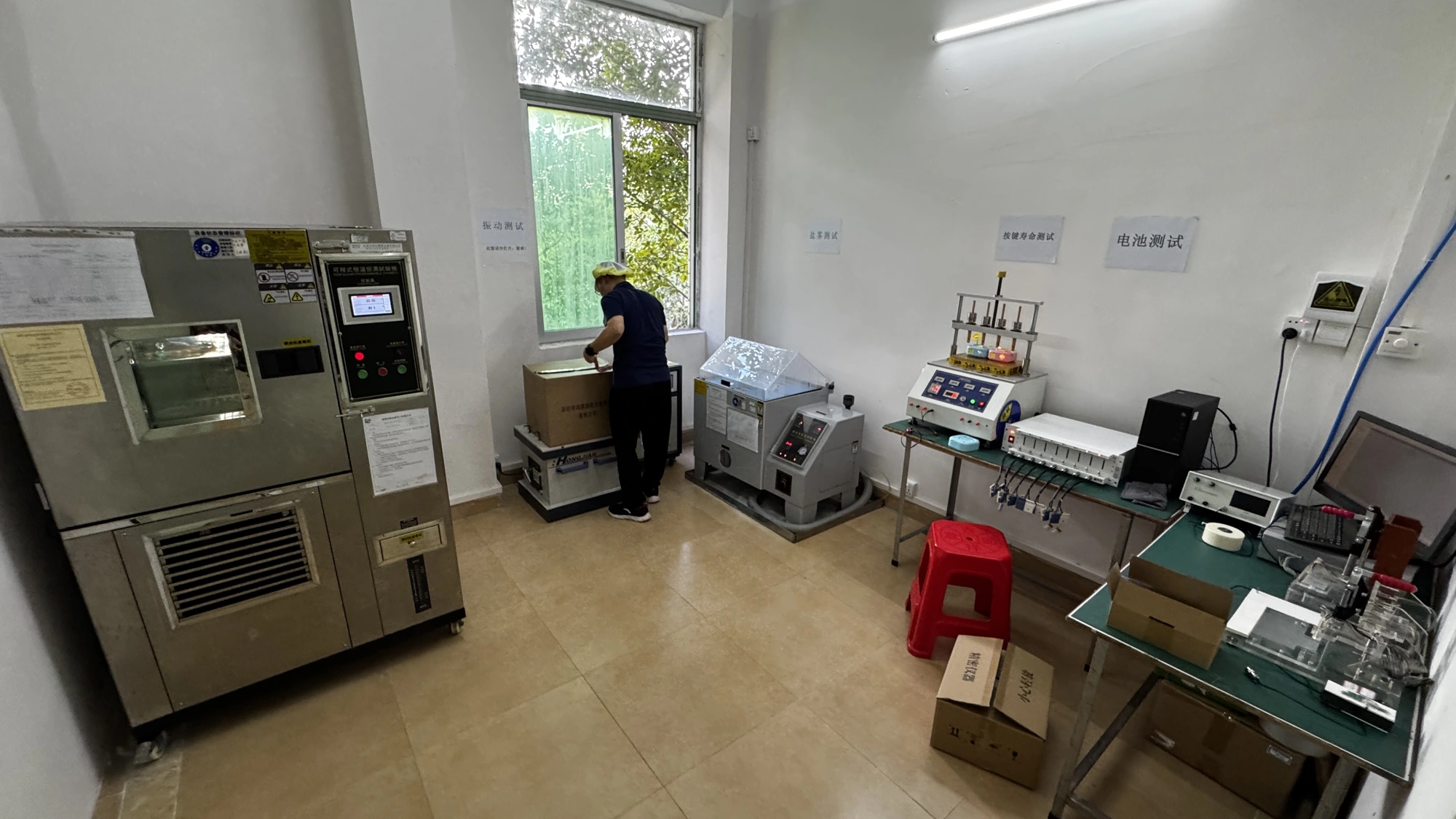
A sample approval checklist carries four things: the exact configuration under review, the tests performed against it, the evidence attached to the record, and the rule used to decide pass, conditional pass or fail. It should be written before the sample arrives, so the review tests what was specified rather than what happened to be built. The approved record needs a revision identifier, dated photographs, the loaded audio files and the hardware configuration, or it cannot be compared with the next sample.
What a sample approval checklist is actually for
A sample approval checklist is not an inspection form. An inspection records what a unit measures; an approval records a decision: which configuration has been accepted, against which criteria, and which limitations are still open.
That distinction matters because production is usually released against an approved sample. If the checklist does not say which configuration was approved, a later unit can be built with a different module, a different battery or a different fabric and still be claimed to match the approved sample.
The checklist is also a comparison tool. A second sample is only meaningful against the first if both records describe the same fields. A checklist whose fields change between rounds produces a review that never closes.
The five blocks every sample approval checklist needs
A workable checklist covers five blocks, and each block needs a named owner. A checklist without owners turns into a list of things that everyone assumed someone else had confirmed.
The blocks below apply to a sound book, a plush audio toy or a sound module, although the detail inside each block changes with the product.
| Block | What it records | Evidence to attach |
|---|---|---|
| Configuration | Module family, firmware or audio version, battery type, fabric and trim, packaging revision | Revision identifier marked on the sample and repeated on the record |
| Content mapping | Which printed cue plays which audio file, in which language and in which order | The approved content map plus the audio files exactly as loaded |
| Function | Every user action and its expected response, including repeated and interrupted operation | Test result per action; video where the behaviour is time-dependent |
| Build and appearance | Alignment, print, embroidery, seams, control placement and agreed finish | Dated photographs of the received unit: front, back and detail |
| Open issues | Limitations accepted, and items not verified at this stage | A written list agreed by both sides before sign-off |
Decide the pass rule before the sample arrives
The most common reason a review meeting ends without a decision is that the criteria were never fixed. If the checklist only lists items to look at, every item becomes a matter of opinion and the meeting negotiates feelings instead of evidence.
State the outcomes in advance. Pass means the configuration is accepted and production can be released against the record. Conditional pass means named items are accepted with named limitations, and the record must state what will be re-checked on the next sample. Fail means the unit cannot serve as a production reference, and the checklist should identify which block fails.
A conditional pass is not a softer fail; it is a different record. Write down what was accepted and what was not, because the next review will be judged against this one.
- Pass: configuration accepted, production released against this record
- Conditional pass: named limitations accepted, named items re-checked at the next sample
- Fail: build or content does not represent the intended product, with the failing block identified
- Not tested: stated explicitly rather than left as a blank line
What to keep with the approved sample
An approval record without a retained unit is difficult to defend. Keep at least one approved sample sealed and identified, so that a later production unit can be compared with the object that was actually accepted.
The retained unit should carry the same revision identifier as the record. If the record says revision B and the sealed sample carries no marking, the comparison becomes an argument rather than a check. Keep the loaded audio files as they were at approval as well, because audio is easy to re-export later and a re-exported file is not evidence of what was heard during the review.
- One sealed approved unit marked with the revision identifier
- Dated photographs of that unit, not of an earlier build
- Audio files exactly as loaded, stored with the record
- The approved content map and pack configuration
- The signed decision, including the named limitations
How the checklist changes by product type
The five blocks stay the same, but the emphasis moves. A sound book is reviewed page by page, a plush audio toy is reviewed as a handheld object, and a sound module is reviewed as a component that someone else will assemble.
For any of them, the review should be done on the physical unit. A render cannot show whether a button is reachable through the fabric, whether the pages turn cleanly with the panel inside the cover, or whether the speaker is audible at the distance the product is actually used.
| Product | Where the checklist should be most specific | What is often missed |
|---|---|---|
| Sound book | Page-to-audio mapping, page turning with the panel inside, speaker opening after assembly | Testing the first spread instead of every page |
| Plush audio toy | Control reach and feel through fabric, battery access without dismantling, handling and drop behaviour | Approving on appearance before the audio path is tested |
| Sound module | Interface definition, loading method, power behaviour, limits of the supplied firmware | No written interface document, so integration assumptions differ |
Where sample approval checklists fail in practice
The same four failures appear across projects, and none of them is a testing problem. First, the checklist is written after the sample arrives, so it describes the unit instead of the requirement. Second, the record names the artwork revision but not the hardware or content revision, which makes the next comparison meaningless.
Third, open issues are discussed in the meeting but not written down, so they reappear at the next sample as if they were new. Fourth, no unit is retained, so a later disagreement has no physical reference and both sides describe the approved sample from memory.
Each of these is fixed by documentation rather than by more testing. One checklist written before the sample, one record that names the configuration, one retained unit and one written list of open issues are enough to make a second sample faster and to make a production quotation comparable.